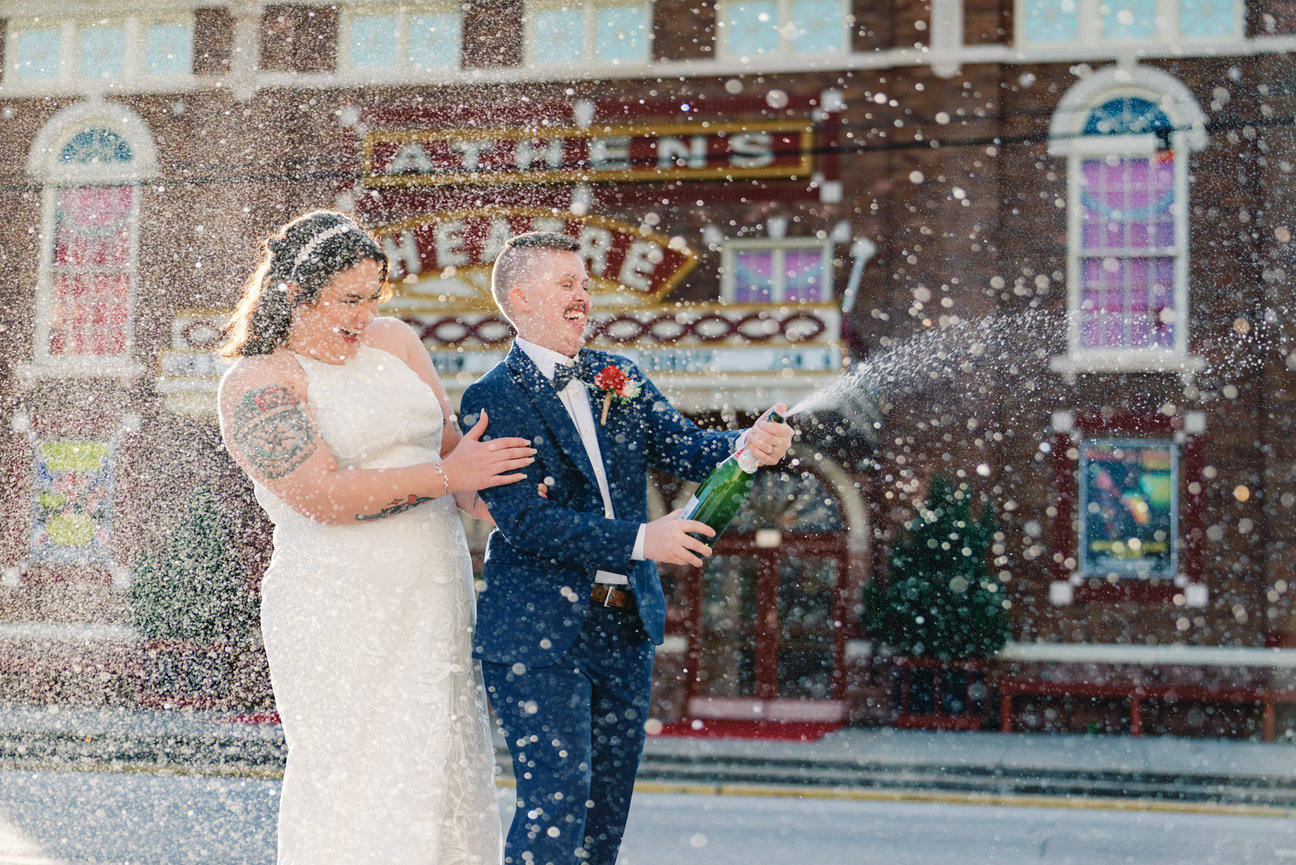
By: Michelle Vila Photography
When you start comparing wedding photographers, the packages can look surprisingly similar. Eight hours of coverage. Two photographers. Hundreds of edited images. An online gallery. Maybe an engagement session or an album. Put three pricing guides next to each other, and it can start to feel like you are comparing the same service at three very different prices.
But after nearly two decades of photographing weddings, I can tell you that two wedding photography packages can list almost exactly the same things and still provide two completely different services. The bullet points tell you what is included, but they don't necessarily tell you what is happening behind the scenes, how experienced the people photographing your wedding are, how much help you will receive before the wedding, how your photographs will be edited, or even exactly what you will receive when your gallery is finished.
There is also a tremendous amount of work that never appears on a photography package at all. An eight-hour wedding is not eight hours of work for your photographer. There may be venue research, timeline planning, family photo organization, communication with other vendors, equipment preparation, scouting, file management, culling, editing, retouching, gallery creation, backups and dozens of other tasks happening before and after the actual wedding day.
So rather than simply giving you a checklist of what should be included in a wedding photography package, I want to explain what those inclusions actually mean, what you should ask about before signing a contract, and why two packages that look nearly identical on paper may not be comparable at all.
Every photographer structures their wedding photography packages differently, but there are several things you will commonly see listed. These usually include a specific number of hours of wedding-day coverage, one or two photographers, an estimated number of finished images, professional editing, and an online gallery where you can view and download your photographs.
Depending on the photographer and the package, you may also see an engagement session, printed photographs, a wedding album, timeline assistance, family formal planning, or other services included. Albums and prints are also commonly offered as optional add-ons rather than automatically included in the package.
The important thing is not to assume that every photographer means the same thing by these terms. “Two photographers” does not necessarily mean both photographers will be there for the same number of hours. “Edited images” can describe very different levels of editing and retouching. Even “digital gallery” does not automatically tell you whether you can download the full-resolution files, how long the gallery will remain online, or what you are allowed to do with the photographs afterward.
Those details are where wedding photography packages really begin to differ, and they are much more important than simply counting how many bullet points are listed on a pricing guide.
Wedding photography packages come with their own vocabulary, and some of it sounds more straightforward than it actually is. So consider this your wedding photography package translator: what they say, and what it actually means.
| WHAT THEY SAY | WHAT IT MEANS |
|---|---|
| “Starting at $____” | This is the photographer's entry price, not necessarily what the coverage you want will actually cost. Find out what is included at that starting price and what couples typically invest for a wedding like yours. |
| “8 Hours of Coverage” | Your photographer is contracted to photograph for eight hours. It does not necessarily mean eight hours will cover everything from getting ready through your grand exit. |
| “Two Photographers” | Two photographers are included, but they may not both be there for the same number of hours. Ask how long each photographer is actually scheduled to stay. |
| “800+ Edited Images” | You should receive at least that many finished photographs. It does not mean you receive every photograph taken during the wedding. |
| “All Edited Images” | The photographer selects the usable photographs, edits them, and delivers the finished collection. Duplicates, test shots, missed focus, blinks, and other rejected images are normally removed during culling. |
| “Professionally Edited” | This can mean anything from basic color and exposure correction to more detailed skin, hair, clothing, and distraction cleanup. Ask what the photographer's standard editing actually includes. |
| “Online Gallery” | A website where you can view your finished photographs. It does not automatically mean you can download every image in high resolution or that the gallery will stay online forever. |
| “High-Resolution” or “Full-Resolution Downloads” | Digital files large enough for printing and personal use. Make sure these downloads are included rather than available for an additional purchase. |
| “Personal Usage & Printing Rights” | You are receiving permission to download, share, and print your photographs for personal use according to the photographer's license. The photographer generally retains the copyright unless it is specifically transferred. |
| “Print Release” | Permission to have your photographs printed rather than being required to purchase every print through the photographer. Check the actual terms because print and usage permissions can vary. |
| “Complimentary Engagement Session” | An engagement session is included with your package. “Complimentary” does not necessarily mean its value was not already factored into the package price, and it may or may not be exchangeable for something else. |
| “Album Included” | A wedding album is part of the package, but find out the size, number of pages, design process, included materials, and what upgrades may cost. |
| “Sneak Peeks Within 24–48 Hours” | You will receive a small selection of photographs quickly. This does not tell you when your complete wedding gallery will be delivered, so check the full-gallery turnaround time in the contract. |
| “Timeline Assistance” | The photographer provides some level of help with photography timing. That could mean reviewing a planner's timeline or being actively involved in building the photography schedule with you. |
| “Family Formal Assistance” | This could mean receiving a template to complete yourself or having your photographer personally help organize and curate your family photo list. |
One of the biggest misconceptions about wedding photography packages is that the number of coverage hours represents the amount of work the photographer is doing. If you hire someone for eight hours, you are paying for much more than the eight hours they physically spend photographing your wedding.
Before a wedding, I may spend hours communicating with my couple, helping with the photography timeline, organizing family formals, researching the venue, communicating with the planner or other vendors, preparing my second photographer, and getting equipment ready. That means charging batteries, preparing memory cards, cleaning and packing cameras and lenses, and making sure everything I need is ready before I ever leave my house.
Sometimes the preparation goes even further. Before photographing a wedding at The Howey Mansion for the first time, I scheduled a venue tour because I wanted to understand the property before arriving on the wedding day. I wanted to know where we could photograph, how the spaces connected, what the lighting looked like, and what I would be walking into. That time never appeared as a line item in my couple's photography package, but it was part of the work I was doing for their wedding.
Then there is everything that happens after the wedding. Thousands of files have to be uploaded and backed up, culled down to the finished collection, edited, reviewed, exported, organized into an online gallery, stored, and ultimately delivered. Equipment has to be unpacked and checked, and the business side of the wedding continues with things like paying the photography team and maintaining the systems that protect those photographs.
This is also one reason two packages with nearly identical bullet points can have very different prices. Different photographers and companies operate very different businesses. Some use higher-volume models with contracted photographers and outsourced post-production, while boutique photographers may intentionally photograph fewer weddings and personally handle much more of the planning, communication, photography, team coordination, editing oversight, and final delivery.
An eight-hour wedding is not eight hours of work. The hours listed in a photography package tell you how long your photographer will be photographing the wedding. They do not tell you how much work is going into everything surrounding those hours.
Eight hours of wedding photography coverage sounds like a lot, and it absolutely can cover a significant portion of a wedding day. But eight hours does not automatically mean you will have photography from getting ready all the way through your grand exit. Something usually has to give at the beginning or the end, especially if you are planning a first look, have a larger wedding party or family, are traveling between locations, or want a lot of detail photography.
For example, I generally need at least 30 minutes just for wedding details, and I often prefer closer to 45 minutes when details are important to my couple. A first look is not simply a five-minute moment either. Once you account for getting everyone into position, photographing the first look, and then using that opportunity for portraits, that portion of the day can easily require about an hour.
For a wedding taking place primarily at one location, a complete photography day can easily be around nine to ten hours. My own typical timeline begins about four hours before the ceremony. Add a 30-minute ceremony, an hour-long cocktail hour, and a four-hour reception, and you are already at approximately nine and a half hours of coverage.
This is also why I created my Full Story Collection around telling the entire wedding story rather than asking couples to squeeze everything they want into a predetermined number of hours. Weddings run late. Portraits sometimes take longer than expected. Things happen. Having enough breathing room in the photography timeline means we do not have to rush through important photographs simply because the clock is running.
If you are trying to determine how much coverage your own wedding may need, my wedding photography timeline guide compares sample timelines for approximately seven to eight hours, eight to nine hours, and nine to ten or more hours of coverage. It can help you see what realistically fits into each option before you choose a photography package based on hours alone.
Almost every wedding photography package will tell you that your photographs are professionally edited, but that phrase can mean very different things from one photographer to another. At a minimum, you should expect the finished photographs to reflect the photographer's portfolio and the style you saw when you hired them. Beyond that, it is worth asking what their normal editing process actually includes.
For one of my full wedding days, I may photograph around 5,000 images and ultimately select approximately 1,000 to 1,200 finished photographs. Those selected images go through my editing process for exposure, color, contrast, cropping and straightening when needed. I also look for distractions that can reasonably be removed, and my photographs go through an additional AI-assisted editing pass for things like skin, hair and clothing cleanup. AI helps with the process, but I customize the settings and personally review the photographs rather than handing the editing over to an automated system.
There is also a difference between normal wedding photography editing and extensive retouching. Changing someone's body, heavily altering an appearance or performing complicated Photoshop work is not automatically part of standard wedding editing. Wedding photography and specialized retouching are different skills, so if there is something specific you expect to be altered in your photographs, ask about it before the wedding rather than assuming it is included.
The best way to understand what “edited images” means is to look at complete wedding galleries, not just a photographer's favorite images on Instagram or their website. A full gallery lets you see whether their editing stays consistent through getting ready rooms, outdoor portraits, ceremonies, dark reception spaces and everything else a real wedding day can throw at them.
When a wedding photography package includes two photographers, the benefit should be much more than simply having twice as many cameras in the room. A good second photographer gives you another point of view. During a ceremony, for example, I may be photographing the bride's expression during the vows while my second photographer is positioned somewhere completely different capturing the groom's reaction. One of us may photograph a wide view of the ceremony while the other captures the close-up moments happening within it.
I also rely heavily on my second photographers for guest photographs and candid moments. My own coverage tends to be more focused on the couple and the major events happening throughout the day, while my second photographer can watch what is happening around us. During a father-daughter first look, I might be concentrating on the bride and her father's reactions while my second photographer notices Mom or a sibling crying a few feet away. Those secondary moments become an important part of the wedding story.
A second photographer can also make a major difference during cocktail hour. Your primary photographer is often still photographing family formals and the couple while guests are enjoying cocktails, so without a second photographer, there may be very little coverage of what is happening there. On a fast-moving wedding day, a second photographer may also photograph reception details before guests enter while the primary photographer is needed somewhere else.
Experience matters here too. I hire second photographers who also have experience photographing weddings as lead photographers because I need them to recognize important moments without waiting for me to tell them what to photograph. When you see “two photographers included” in a package, ask how experienced the second photographer is and, just as importantly, how many hours they will actually be there. Two photographers listed on a package does not necessarily mean two photographers are providing coverage for the entire day.
There is no universal number of photographs that every wedding photographer should deliver. Some photographers may deliver around 500 photographs from a full wedding day because their approach is to curate a tighter collection of the strongest images. Others deliver considerably more. Neither approach is automatically better, but you should know approximately what to expect before you book.
My own rule of thumb is a minimum of about 100 finished photographs per hour of wedding-day coverage, although I typically deliver closer to 125 to 150 per hour. So for an eight-hour wedding, I would expect to deliver at least 800 finished photographs. For a longer wedding day, that number can easily exceed 1,000.
One thing that is a little different about my galleries is that I deliver every finished photograph in both color and black and white. If I finish 1,000 photographs from your wedding, your gallery will actually contain 2,000 files because you receive both versions. Other photographers may choose only certain photographs for black-and-white conversions, so if having both versions matters to you, that is another good question to ask.
And when a package says you will receive “all edited images,” that almost never means every frame the photographer captured. I may photograph around 5,000 images during a wedding, but many of those are duplicates, test shots, blinks, missed expressions or multiple frames of the same moment. Culling is the process of selecting the photographs that become the finished wedding gallery. What matters most is knowing approximately how many finished images you can expect and whether the photographer's complete galleries feel like a thorough telling of the day.
Wedding photography packages sometimes include engagement sessions, albums, prints, canvases or other extras, and these can absolutely have value. But I would never choose your wedding photographer because one package comes with more “free stuff.” The quality of the photography, your experience with the photographer, and what you will receive from the wedding itself should matter much more than a canvas, USB drive or print credit added to make a package look more impressive.
An engagement session is one extra that I do think can be genuinely useful. Beyond getting more photographs, it gives you a chance to experience how your photographer directs and poses you before the wedding. You learn what it feels like to be photographed together, and when the wedding day arrives, you are not meeting that part of the process for the first time.
If an engagement session is listed as “complimentary,” remember that included does not necessarily mean free. The photographer may have already built the value of that session into the package price. If you know you do not want or need an engagement session, it is reasonable to ask whether it can be exchanged for additional wedding coverage or something else you would value more. Some photographers will allow that and others will not, so it is simply something to ask.
I also believe wedding albums are incredibly valuable, but I do not think every couple needs to purchase one while they are already paying for an entire wedding. A professionally made album becomes part of your family's history and may eventually mean even more to your children or grandchildren than it does to you right now. If an album does not fit comfortably into the wedding budget, ask whether you can purchase one later rather than choosing a photography package based solely on whether an album is included today.
The bigger lesson is to look at what you are actually paying for. A package with fewer flashy extras may provide significantly more value where it matters most, while a long list of bonuses does not necessarily tell you anything about the photographer's experience, service, editing, team or finished wedding gallery.
Before deciding that one wedding photography package is a better value than another, make sure you are actually comparing the same things. A pricing guide can give you the highlights, but your contract and a conversation with the photographer should fill in the details. These are some of the questions I would want answered before booking:
I would also ask how involved the photographer will be before the wedding. Will they help you build or review the photography timeline? Will they help organize your family formal list? Are they communicating with your planner and other vendors when necessary? Those things may not take up much space on a pricing guide, but they can take a tremendous amount of work off your plate.
Two wedding photography packages can list the exact same things and still provide two completely different services. Eight hours, two photographers, edited images and an online gallery tell you what the package includes, but they do not tell you everything you are actually paying for.
You are also investing in the photographer's experience, their team, their planning, their communication, their editing process, their equipment and backup systems, and everything that happens before, during and after your wedding to turn those bullet points into a finished wedding gallery. An eight-hour wedding is not eight hours of work, and the value of a photography package cannot always be measured by counting the number of things listed inside it.
When you compare photographers, look beyond which package gives you the most hours, the most extras or the lowest price. Make sure you understand what each inclusion actually means, look through complete wedding galleries, read the contract carefully and choose the photographer whose work, process and level of service feel right for your wedding.
If you would like to see exactly how I structure my own wedding photography coverage, you can download my complete pricing guide below.
If you're planning your wedding and want to learn more about working with Michelle Vila Photography, I've made it easy to find exactly what you need next. Explore pricing, download my wedding-day timeline guide, schedule a Zoom call, or send me your wedding details below.
Michelle Vila is an Orlando and Central Florida wedding photographer with nearly two decades of experience photographing weddings throughout Florida. She began photographing weddings in 2008 and has documented hundreds of celebrations, including Orlando weddings, Disney weddings, Disney Cruise Line weddings, multicultural weddings, and celebrations throughout Central and South Florida.
Her photography combines timeless portraiture, true-to-life color, editorial influence, and candid storytelling. Through her educational wedding planning guides, Michelle shares the practical knowledge she's gained from years of working through real wedding timelines, changing weather, difficult lighting, family dynamics, and all of the wonderfully unpredictable things that happen on an actual wedding day.
Learn more about Michelle Vila or explore her Orlando wedding photography portfolio.